

The difference between a Christmas tree that looks lush on New Year’s Eve and one that sheds its needles by mid-December usually comes down to a single skill: knowing how to water it correctly. It sounds almost too simple to matter, yet watering is the part of tree care that homeowners get wrong most often, usually through small, well-meaning errors made in the first few hours after the tree comes home.
This guide walks through the entire process, step by step, from the fresh cut on the trunk to the daily routine that keeps the reservoir full. You will learn exactly what to do before the tree goes in the stand, how much water to add, how often to refill, which additives are worth your money, and the placement choices that quietly help or hurt your tree. If you want to explore more holiday tree resources, MyChristmasTrees.online is a good place to start.
How Do You Water a Christmas Tree?
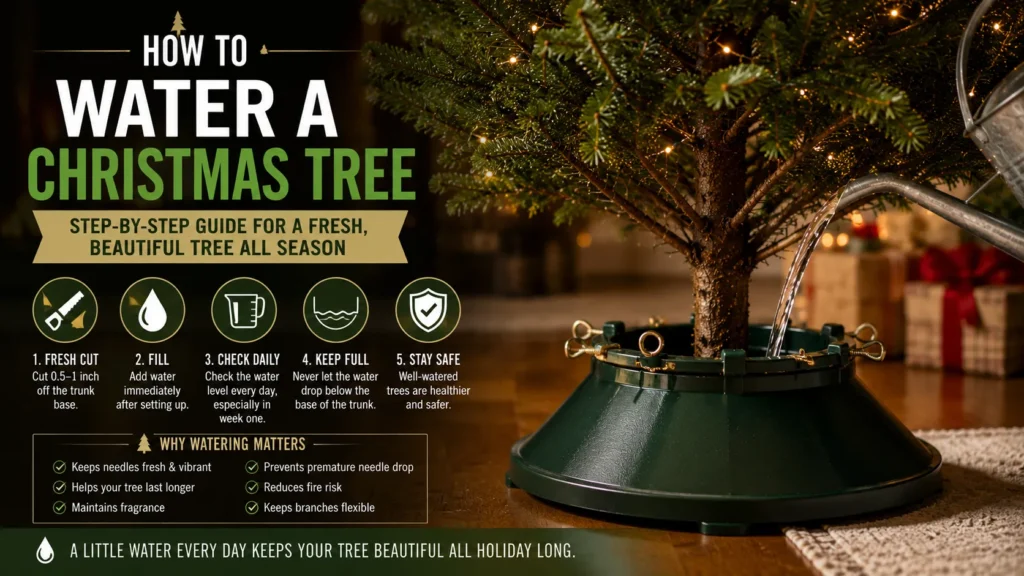
Watering a Christmas tree properly comes down to five core actions:
- Make a fresh cut on the bottom of the trunk if it has been more than a few hours since it was harvested.
- Place the tree in a stand with a large water reservoir, sized to match the tree.
- Fill the stand immediately with plain, room-temperature water.
- Check the water level every day, especially during the thirsty first week.
- Never let the water drop below the base of the trunk, or the cut can seal and stop drinking.
Quick Summary
| Step | What to Do | Why It Matters |
|---|---|---|
| Fresh cut | Saw 0.5–1 inch off the trunk base | Reopens sealed channels so the tree can drink |
| Choose a stand | Pick one holding at least 1 gallon | Prevents the reservoir from running dry |
| Fill immediately | Add water within hours of the cut | The first hours are when uptake is highest |
| Check daily | Glance at the level every day | A dry spell can permanently seal the trunk |
| Keep it full | Keep the trunk base submerged at all times | Maintains hydration, fragrance, and fire safety |
Master those five steps and you have learned almost everything there is to know about watering a real Christmas tree.
Why Watering Matters
Before getting into the how, it helps to understand the why, because the reasons are what turn a chore into a habit you actually keep.
Water absorption keeps the tree alive. A cut tree behaves much like cut flowers in a vase. The trunk continues drawing water up through its channels to feed the branches and needles. Keep that supply flowing and the tree stays healthy for weeks.
Needle retention depends on it. Hydrated needles stay flexible and firmly attached. The moment a tree dehydrates, needles dry from within and begin dropping, often in alarming quantities.
It prevents the tree from drying out. A dry tree loses its rich green color and full shape. Branches that should look soft and dense start to look sparse and tired.
It is a real fire safety measure. A well-hydrated tree resists ignition, while a dried-out one can burn frighteningly fast. Consistent watering is one of the most important holiday safety steps in any home.
It maintains fragrance. That signature evergreen scent comes from oils in fresh needles. A hydrated Balsam fir or Fraser fir fills a room with fragrance, while a dry tree loses it almost entirely.
It keeps branches flexible. Supple branches hold ornaments and lights gracefully. Brittle ones snap and sag, undermining all your decorating effort.
Step 1: Make a Fresh Cut Before Placing the Tree in the Stand
This is the step most likely to make or break your tree, and it happens before a single drop of water is involved.
Why the trunk seals itself. Once a tree is cut, sap begins to harden over the exposed surface within hours, forming a resin seal much like a scab. That seal blocks the channels the tree uses to absorb water. A tree from a lot may have been cut days or even weeks earlier, meaning its trunk is already sealed and unable to drink.
How much to cut. Saw a fresh half-inch to one inch off the bottom of the trunk, straight across. A clean, level cut sits properly in the stand and exposes fresh, open wood. There is no need to cut at an angle or drill holes in the base, despite what some old advice suggests. A flat cut maximizes the surface that can take up water.
When to make the cut. Ideally, cut the trunk right before the tree goes into the stand. If you buy from a lot, many will make a fresh cut for you, but the clock starts ticking the moment they do. Get the tree into water within a few hours, or at most within 24 hours, of that cut.
Why timing matters. If too much time passes between the cut and the water, the trunk seals again and you are back where you started. The practical lesson: do not buy a freshly cut tree and then leave it in the garage for two days before setting it up. Plan to cut and water in close succession.
A useful tip for tree-lot purchases: ask them to cut the trunk, then drive straight home and get it standing in water. If you cannot set it up immediately, stand it in a bucket of water in a cool spot like a garage until you are ready.
Step 2: Choose the Right Christmas Tree Stand
The stand is the unsung hero of tree care. A good one makes daily watering effortless, while an undersized stand can doom a tree no matter how diligent you are.
Water reservoir size is the most important feature. The reservoir should hold enough that the trunk stays submerged between checks. For most trees, that means at least one gallon of capacity, and more for tall trees.
Stability protects everything you place on the tree. A wide base and secure bolts or clamps keep a heavy, decorated tree upright, which matters most in homes with children or pets.
Stand capacity should match the trunk. A common guideline is one quart of water capacity per inch of trunk diameter. A thick-trunked tree needs a deeper, wider basin to keep up with its thirst.
Matching stand to tree size prevents constant refilling. A 6 ft tree in a one-gallon stand is manageable, but a 10 ft tree in that same small stand will empty it fast and risk running dry.
Stand Selection by Tree Size
| Tree Height | Trunk Diameter (approx.) | Recommended Reservoir | Refill Frequency (week 1) |
|---|---|---|---|
| 5–6 ft | 3–4 inches | 1 gallon | Once daily |
| 7 ft | 4–5 inches | 1.25–1.5 gallons | Once or twice daily |
| 8 ft | 5–6 inches | 1.5–2 gallons | Twice daily |
| 9–10 ft | 6+ inches | 2+ gallons | Twice daily |
When in doubt, buy a larger stand than you think you need. The extra capacity is cheap insurance against a sealed trunk.
Step 3: Fill the Stand Immediately
Once the tree is standing straight and secure, add water without delay.
Why waiting reduces water uptake. The first few hours after a fresh cut are when the trunk drinks fastest. Leaving it dry during that window lets the cut begin sealing, undercutting all the effort you put into Step 1. Fill the stand the moment the tree is upright.
How much water to add initially. Fill the reservoir to its capacity right away. A fresh tree can take up a surprising amount in its first hours, so do not be alarmed if the level drops quickly. That is exactly what a healthy tree should do, and it is a good sign your fresh cut worked.
Best water temperature. Plain, room-temperature tap water is ideal. There is no need to use warm or cold water, and no benefit to either. Some sources suggest warm water helps initial uptake, but plain tap water at room temperature works reliably for the vast majority of trees. Consistency of supply matters far more than temperature.
Keep a pitcher or watering can nearby from the start so that first fill, and every refill after, is quick and mess-free.
Step 4: Check Water Every Day
Daily checking is the heart of the whole routine, and it takes less than a minute.
Build a daily routine. Tie the check to something you already do every day, like making morning coffee or settling in after dinner. A consistent trigger means you will rarely forget.
Morning vs evening. During the first week, checking both morning and evening is ideal because the tree drinks so heavily. After the first week, a single daily check is usually enough, though warm or dry homes may still need two.
Typical daily consumption. A fresh tree can drink up to a gallon a day in its first week, then taper off as the season goes on. The rate depends on size and conditions, so let the tree set the pace. If you find the reservoir nearly empty each morning, that is your cue to check more often or upgrade to a larger stand.
For a deeper look at frequency and how it changes through the season, the guide on how often to water a Christmas tree breaks down the rhythm week by week.
Step 5: Keep the Water Reservoir Full
Checking is only half the job. The other half is acting on what you see.
Never let the trunk become exposed. The cut end of the trunk must stay underwater at all times. The instant it is exposed to air for a few hours, the sealing process begins. Refill whenever the level approaches the bottom of the trunk, not when it hits zero.
What happens if the water level drops too low. If the reservoir empties and the trunk dries, the cut seals over and the tree largely stops absorbing water, even after you refill. From there, needle drop and brittleness follow quickly, and fire risk rises.
Can the tree recover? Sometimes, but not reliably. If you catch a dry stand early, you may get away with a quick refill. If the trunk has fully sealed, the only real remedy is to remove the tree, make a fresh cut, and stand it back in water. This is messy and frustrating once a tree is fully decorated, which is precisely why prevention beats cure.
A practical example: imagine a family leaves for a weekend trip three days after setting up their tree, when it is still drinking heavily. They return to an empty stand and a sealed trunk, and within days the tree is shedding needles across the floor. A larger stand and a quick refill before leaving would have prevented the whole problem. When you travel during the season, top off the reservoir right before you go and recruit someone to check it if you will be gone more than a day or two.
How Much Water Does a Christmas Tree Need?
Water needs scale with tree size, but indoor conditions can shift those numbers significantly. Use this table as a starting point, then adjust based on what your tree actually does.
Estimated Daily Water Use by Tree Height
| Tree Height | First-Week Daily Use | Later-Season Daily Use |
|---|---|---|
| 5 ft | 0.5–0.75 gallon | 0.25–0.5 gallon |
| 6 ft | 0.75–1 gallon | 0.5–0.75 gallon |
| 7 ft | 1–1.25 gallons | 0.5–1 gallon |
| 8 ft | 1.25–1.5 gallons | 0.75–1 gallon |
| 9 ft | 1.5–2 gallons | 1–1.25 gallons |
| 10 ft | 2+ gallons | 1.25–1.5 gallons |
Consumption varies with species and conditions. A Fraser fir or Balsam fir tends to drink steadily and hold needles well. A Douglas fir can be thirsty. A warm room, dry winter air, or a spot near a heating vent will all push consumption higher, while a cool, humid corner slows it down. The figures above are guidelines, not guarantees, so watch your own tree closely in the first week to learn its personal pace.
Should You Add Anything to the Water?
Few topics in tree care attract more folk wisdom than what to put in the stand. Here is an honest, evidence-based rundown of the popular additions.
- Sugar. The idea is that sugar feeds the tree. Most controlled studies have found no meaningful benefit, since a cut tree has limited ability to process it.
- Aspirin. A common suggestion, but research has generally not shown that aspirin improves freshness or water uptake in cut trees.
- Bleach. Sometimes recommended to discourage mold in the reservoir. Evidence of any freshness benefit is weak, and it is unnecessary for a typical household tree.
- Soda or lemon-lime drinks. Often suggested for their sugar content, but like plain sugar, the benefit has not held up in testing, and the residue can encourage bacteria.
- Commercial preservatives. Marketed specifically for cut trees, with mixed results. Most research suggests they offer little advantage over plain water.
The consistent finding across horticultural research is straightforward: plain, clean water kept at a steady level is what keeps a tree fresh. The most effective additive is the one that costs nothing, your daily attention. Skip the kitchen-cabinet remedies and focus on never letting the stand run dry.
Common Watering Mistakes
Most tree failures trace back to a short list of avoidable errors. Here they are alongside their fixes.
| Mistake | Why It Hurts | The Fix |
|---|---|---|
| Forgetting daily checks | Trunk seals and stops drinking | Tie the check to a daily habit |
| Using a small stand | Reservoir empties and runs dry | Choose at least a 1-gallon stand |
| Placing near heat vents | Rapid drying of needles and reservoir | Position away from vents and radiators |
| Letting the reservoir run dry | Cut seals over permanently | Refill before the level reaches the trunk |
| Waiting too long before placing in water | Trunk seals before its first drink | Set up within hours of the fresh cut |
| Recutting the trunk repeatedly | Disruptive and rarely needed | Make one fresh cut at setup, then maintain water |
The first week is when these mistakes do the most harm, because that is when the tree is establishing its water uptake. Stay attentive early and the rest of the season is smooth.
How to Keep a Christmas Tree Fresh Longer
Watering is the foundation, but a few environmental choices help your tree reach the long end of its natural lifespan.
Room temperature. Cooler rooms slow water loss. If you can keep the tree in a space that runs a few degrees cooler, especially overnight, it will hold up longer.
Humidity. Winter heating dries indoor air, which pulls moisture from the needles. A humidifier nearby, or simply a less arid room, helps the tree stay supple.
Tree placement. Keep the tree away from fireplaces, radiators, heating vents, and direct sunlight. Each of these accelerates drying and shortens the tree’s life.
Watering consistency. This is the single biggest lever. A tree that never runs dry will outlast an identical tree that is allowed to seal up, every time.
Lighting choices. Cooler-running lights put less thermal stress on the needles, which helps preserve moisture.
For a comprehensive look at maximizing tree longevity from purchase to takedown, the real Christmas tree care guide covers every stage in depth.
Does Tree Size Affect Water Needs?
Yes, and the relationship is direct. Larger trees simply need more water.
Larger trees have more foliage to keep hydrated, so they pull more water overall. A 10 ft tree can easily drink twice what a 5 ft tree does during the first week.
Wider trunks have more surface area and internal channels, meaning they take up water faster and need a reservoir that can keep pace.
Bigger reservoirs become essential at larger sizes. Pairing a tall tree with a small stand is a recipe for a dry trunk, so size the stand to the tree from the start.
Choosing the right height is about more than water, of course. Room proportions and ceiling clearance matter too, which the guide on what height Christmas tree to buy for your home walks through. And if you are torn between the largest options, the comparison of 9 vs 10 feet trees covers the practical trade-offs, including the extra water and decorations a bigger tree demands.
Decorating Without Drying Out Your Tree
How you decorate can either protect your tree or quietly speed its decline. A few smart choices make a real difference.
LED lights run cool and put almost no thermal stress on the needles, making them the friendlier option for a fresh tree. The breakdown of LED vs incandescent lights explains exactly why cooler lights are usually the better call.
Heat-producing bulbs, like older incandescent strands, give off enough warmth to accelerate drying on a fresh tree and add risk if the tree becomes dehydrated. If you use them, be especially diligent about water. The full Christmas tree lighting guide covers how to light a tree beautifully while keeping it healthy.
Decorating around the water stand is worth planning. Arrange the tree skirt and gifts so you can still reach the reservoir easily. If refilling means crawling under a mountain of presents, you will skip checks, and skipped checks are how trees dry out.
Avoiding blocked access keeps your daily routine painless. Some stands have a funnel or visible reservoir specifically to make topping up easy even after decorating.
Getting the light quantity right also keeps a fresh tree from being overloaded. The guide on how many lights you need for a Christmas tree helps you plan the right amount before you start.
Real vs Artificial Trees
If the daily watering routine sounds like more than you want to take on, it is fair to ask whether a real tree is the right choice at all.
A real tree offers fragrance, tradition, and that irreplaceable just-cut feel, but it requires watering, cleanup, and a new purchase each year. An artificial tree skips watering entirely, assembles the same way every season, and lasts for years, though it lacks the scent and ritual of the real thing.
For families who love the experience, the watering routine is a small price for the real thing. For those who prioritize convenience, artificial often makes more sense. The complete comparison of real vs artificial trees lays out the full trade-offs.
It also helps to understand the long-term picture. The guides on how long artificial trees last and the 10-year cost comparison put real numbers behind the convenience, while the look at whether artificial trees are eco-friendly is worth reading if sustainability factors into your decision.
Christmas Tree Planning Tools
A little planning before you decorate makes ongoing maintenance easier. When you know your lighting and ornament load in advance, setup goes faster and you are less likely to disturb the water stand once everything is in place.
Estimating your lighting needs ahead of time is simple with the Christmas tree light calculator, which sizes your strands to your tree height. For ornaments, the ornament calculator helps you buy the right quantity rather than over- or under-decorating. And for a complete picture that ties lights, ornaments, and other elements together, the decoration calculator lets you plan the whole tree before the first box comes down from the attic.
Recommendations
One of the biggest mistakes homeowners make is thinking watering is something they only need to do every few days. A healthy Christmas tree should be checked every day, especially during the first week, when it absorbs the most water. Consistent watering is the simplest and most effective way to keep a real Christmas tree fresh, safe, and beautiful throughout the holiday season.
If you take one habit from this guide, make it the daily check. It requires no special equipment, no additives, and less than a minute of your time, yet it does more for your tree than anything else you can buy. Combine it with a generously sized stand and a placement away from heat, and you have handled the overwhelming majority of what real tree care actually demands.
Final Verdict
What is the best way to water a Christmas tree?
Follow these steps in order and your tree will stay fresh through the season:
- Make a fresh half-inch to one-inch cut on the trunk and get the tree into water within a few hours.
- Choose a stand with a reservoir of at least one gallon, larger for tall trees.
- Fill the stand immediately with plain, room-temperature water.
- Check the water level every day, twice daily during the first week.
- Keep the trunk base submerged at all times and never let the stand run dry.
- Keep the tree away from heat sources and skip the additives.
That sequence is the entire playbook. Do it consistently and the tree takes care of the rest.
Conclusion
Watering a Christmas tree well is less about effort and more about timing and consistency. It begins with a fresh cut, continues with the right stand and an immediate first fill, and is sustained by a daily check that keeps the reservoir topped up. Get those moments right, particularly in the crucial first week, and you sidestep nearly every problem that causes a tree to brown and shed early.
There is no secret formula and no magic ingredient, just clean water and a minute of daily attention. Pair that with smart placement away from heat and cooler-running lights, and your tree will hold its needles, keep its fragrance, and stay safe and beautiful from the day you bring it home until the day you take it down. You now know exactly how to water a Christmas tree, and your tree will thank you for it.
Frequently Asked Questions
1. How do you water a Christmas tree?
Make a fresh cut on the trunk, stand the tree in a stand with a large reservoir, fill it immediately with plain room-temperature water, check the level daily, and never let the water drop below the base of the trunk.
2. What should I do before putting the tree in the stand?
Saw a fresh half-inch to one inch off the bottom of the trunk. This removes the sealed layer and reopens the channels the tree uses to absorb water. Get it into water within a few hours of cutting.
3. How much water should I add at first?
Fill the reservoir completely as soon as the tree is upright. A fresh tree can drink a large amount in its first hours, so expect the level to drop quickly. That is a healthy sign.
4. How often should I refill the water?
Check daily and refill whenever the level nears the trunk base. During the first week, you may need to top up once or twice a day. Larger trees need more frequent refills.
5. Can I use additives like sugar, aspirin, or bleach?
You can, but most research shows little or no benefit. Plain, clean water kept at a steady level is what actually keeps a tree fresh, so additives are generally unnecessary.
6. What happens if I let the stand run dry?
The cut trunk can seal over with hardened sap and stop absorbing water, leading to needle drop, brittle branches, and higher fire risk. If it happens, recut the trunk and stand it back in water right away.
7. Should I use warm or cold water?
Plain, room-temperature tap water works well. There is no reliable benefit to heating or chilling it. Keeping the level consistent matters far more than temperature.
8. Does tree size change how I water it?
Yes. Larger trees with wider trunks drink more water and need bigger reservoirs. A 10 ft tree can use roughly twice what a 5 or 6 ft tree does, especially in the first week.
9. How do I keep my tree fresh longer?
Water consistently, keep the tree in a cooler room with some humidity, position it away from heat sources and sunlight, and use cooler-running LED lights. Consistency of watering is the biggest single factor.
10. Why is my tree dropping needles even though I water it?
If watering is consistent, the likely causes are a trunk that sealed before its first drink, placement near a heat source, or a tree that was not freshly cut at setup. Check for warm air blowing on the tree and confirm the trunk base has stayed submerged.