
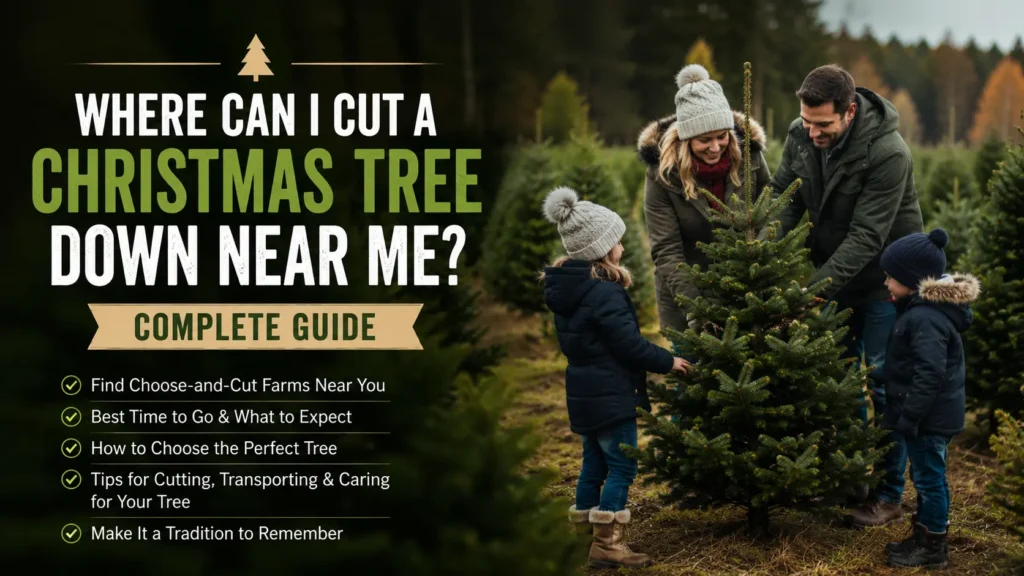
There is something special about walking through rows of evergreens on a crisp December morning, coffee in hand, kids running ahead, searching for the one tree that will stand in your living room all season. Cutting your own Christmas tree has grown from a practical chore into one of the most cherished family traditions of the holidays, and for good reason. You get the freshest possible tree, an unforgettable outing, and a story that gets retold every year when the decorations come out.
If you have been searching for where you can cut a Christmas tree down near you, this guide covers everything you need to know to make the experience smooth, safe, and memorable. Buying a pre-cut tree from a lot is convenient, but cutting your own is a different experience entirely. You choose the exact tree, you know precisely how fresh it is, and you turn a simple purchase into an afternoon adventure.
This complete guide from MyChristmasTrees.online explains where to find choose-and-cut farms, how the process works, the best time to go, which tree species to look for, what to bring, how to cut and transport your tree safely, and how to keep it fresh once it’s home. Whether this is your first time or you’re refining a long-standing tradition, you’ll leave ready for a great day at the farm.
Where Can You Cut Down Your Own Christmas Tree?
You can cut down your own Christmas tree at several types of locations, and the best option depends on where you live. The most common and family-friendly choice is a dedicated Christmas tree farm, but you have more options than you might expect.
Christmas tree farms are properties that grow evergreens specifically to be cut for the holidays. Most offer a welcoming, organized experience with marked rows, staff on hand, and often extra activities.
Choose-and-cut farms are the classic family destination. You walk the fields, pick your tree, and cut it down yourself or have staff help. These farms grow their trees on-site, so everything is fresh and locally grown.
U-Cut farms are essentially the same as choose-and-cut operations, with the name simply emphasizing that you do the cutting. The “u-cut” label is common in farm names and local listings, so it’s worth searching for that exact phrase in your area.
National forests, in certain regions and where legally permitted, allow tree cutting with a permit. This is a more rugged, back-to-nature option that requires planning, a permit purchased in advance, and adherence to strict rules about which trees and which areas are allowed.
Local seasonal farms pop up each year and may operate only during the holiday weeks. Many are small, family-run operations that offer a personal, charming experience.
Availability varies significantly by region, season, and weather. Some farms sell out of mature trees early in busy years, and permit programs in national forests have limited quotas and specific dates. Always check directly with local farms or the relevant forest service office before you visit to confirm hours, availability, and any reservation requirements.
What Is a Choose-and-Cut Christmas Tree Farm?
A choose-and-cut Christmas tree farm is exactly what it sounds like: a working farm where you select a living tree from the field and cut it down to take home. Understanding how the typical visit flows will help you know what to expect.
When you arrive, most farms greet you near an entrance or farm store where you’ll pay an admission fee, receive instructions, and often pick up a saw if the farm provides them. Some farms charge admission separately, while others fold it into the tree price. From there, you head out into the fields, frequently with a map or marked sections indicating which trees are ready for cutting and which species grow where.
Pricing models vary. Some farms charge a flat rate per tree regardless of size, while others price by height or by the foot, measuring your tree after you cut it. It’s smart to ask about pricing before you start hunting so there are no surprises at checkout.
The farm experience is a big part of the appeal. Many choose-and-cut farms have turned the visit into a full holiday outing, offering hot cocoa, wagon or hayrides out to the fields, photo opportunities, fresh wreaths and garland for sale, and sometimes farm animals or a gift shop. Family activities like these are why so many people return to the same farm year after year. After you cut your tree, staff typically help with shaking out loose needles, baling the tree in netting for easy transport, and loading it onto your vehicle.
Best Time to Visit a Christmas Tree Farm
Timing your visit well makes a real difference in tree selection, crowds, and overall enjoyment. Here is how to think about when to go.
Early season is generally the best time for selection. The weekend after Thanksgiving is traditionally when most farms open and when the fields are fullest, giving you the widest choice of shapes and sizes. If you want first pick of the best trees, going early in the season is the smart move.
Weekdays versus weekends is a major consideration. Weekends, especially the first two of December, are by far the busiest, with crowded parking, lines for saws and baling, and picked-over rows by late afternoon. If your schedule allows, a weekday visit means more space, more staff attention, and a calmer experience.
Weather matters too. A clear, cold day is ideal for tromping through fields, while rain or heavy snow can make the ground muddy and the experience less pleasant. Checking the forecast and dressing in layers and waterproof boots will keep the day comfortable.
Tree selection naturally thins out as the season progresses. By mid to late December, the best-shaped and most popular sizes are often gone. If you have a specific species or size in mind, earlier is better.
Peak holiday crowds tend to cluster on the first three weekends of December and around any special farm events. If you prefer a quieter outing, aim for a weekday or the very start of the day when the farm opens.
If you’d rather skip the farm experience altogether and shop sales instead, it’s worth knowing the best time to buy a 9-foot Christmas tree on clearance, which covers the discount windows for pre-cut and artificial trees later in the season.
Popular Christmas Tree Species Found at Tree Farms
Knowing your species before you go helps you choose a tree that suits your home, your decorating style, and how long you need it to last. Here are the most common evergreens you’ll find at choose-and-cut farms.
Fraser Fir
The Fraser Fir is one of the most popular Christmas trees in the country, and for good reason. It has a classic conical shape, soft blue-green needles with silvery undersides, and excellent needle retention. The branches are strong and slightly upturned, making them ideal for holding heavier ornaments. Its pleasant, mild fragrance and durability make it a top all-around choice.
Douglas Fir
The Douglas Fir is prized for its full, bushy appearance and sweet, classic Christmas-tree scent. Its soft needles radiate in all directions, giving the tree a lush, dense look. It’s a wonderful choice for families who love fragrance and a traditional full shape, though its softer branches hold lighter ornaments best.
Noble Fir
The Noble Fir is known for its stiff, sturdy branches and distinctive spacing between layers, which creates room to hang ornaments and show them off. Its bluish-green needles and excellent longevity make it a favorite for those who want a striking, long-lasting tree. The strong branches handle heavy decorations with ease.
Balsam Fir
The Balsam Fir delivers perhaps the most quintessential Christmas fragrance of any tree, filling a room with that unmistakable evergreen scent. It has a dark green color, a neat pyramid shape, and good needle retention. It’s a beloved traditional choice, especially for those who prize aroma above all.
Scotch Pine
The Scotch Pine is one of the most durable and forgiving trees, with stiff branches and excellent needle retention. Its bright green needles stay on the tree exceptionally well, even when it dries out, making it very tolerant of warm indoor conditions. It’s a sturdy, budget-friendly classic.
White Pine
The White Pine has soft, flexible, blue-green needles and a feathery, full appearance. It has very little fragrance, which makes it a good option for anyone sensitive to strong scents. Its delicate branches are better suited to lightweight ornaments and minimal decorations, letting the tree’s graceful form shine.
| Species | Needle Retention | Fragrance | Branch Strength | Best For |
|---|---|---|---|---|
| Fraser Fir | Excellent | Mild, pleasant | Strong | All-around favorite, heavy ornaments |
| Douglas Fir | Good | Sweet, classic | Soft | Full, fragrant traditional look |
| Noble Fir | Excellent | Mild | Very strong | Heavy ornaments, long-lasting display |
| Balsam Fir | Good | Strong, classic | Moderate | Maximum Christmas scent |
| Scotch Pine | Excellent | Moderate | Stiff | Durability and warm rooms |
| White Pine | Good | Very light | Soft/flexible | Low scent, lightweight decorating |
If fragrance is a deciding factor for you, our guide on which type of Christmas tree smells better and why it matters compares the scents of these species in detail.
How to Choose the Right Tree
Once you’re in the field surrounded by hundreds of options, it’s easy to feel overwhelmed or to fall for a tree that’s far too big once you get it home. Use these criteria to choose wisely.
Height is the most common mistake. Trees look much smaller out in an open field than they do in your living room. Measure your ceiling height before you go and subtract enough room for your tree stand and topper, then bring those numbers with you. Getting the proportions right is so important that our guide on what height Christmas tree you should buy for your home is worth reading before your trip. If you’re torn between larger sizes, our comparison of 9 vs. 10-foot Christmas trees and which one fits best can help you decide.
Width matters just as much as height, especially for tighter rooms. A tree that’s the perfect height but too wide can overwhelm a space and block walkways. Picture the footprint the tree will occupy and consider where it will sit before committing.
Shape is a matter of preference, but look for a tree that’s reasonably symmetrical and full on all sides if it will stand in the open. If one side will face a wall or corner, you can be more forgiving about a flat or sparse back.
Freshness is one of the biggest advantages of cutting your own, but it still pays to check. Run your hand along a branch; the needles should be flexible and firmly attached, not brittle or falling off. A healthy green color and a fresh scent are good signs.
Trunk quality is often overlooked. Look for a straight trunk with enough clear, branch-free space at the base to fit into your tree stand. A crooked or overly thick trunk can be a frustrating surprise when you try to set the tree up at home.
What to Bring When Cutting Your Own Tree
Showing up prepared makes the whole experience smoother and safer. Many farms provide saws and baling, but it’s wise to bring your own essentials. Here is a checklist to pack before you head out.
| Item | Why You Need It |
|---|---|
| Work gloves | Protect hands from sap, needles, and the saw |
| Measuring tape | Confirm tree height and width in the field |
| Rope or tie-down straps | Secure the tree to your vehicle for transport |
| Old blanket or tarp | Protect your car roof or interior from sap and needles |
| Hand saw | In case the farm doesn’t provide one |
| Water and snacks | Stay comfortable, especially with kids along |
| Warm layers and waterproof boots | Fields can be cold, wet, and muddy |
| Cash or card | Some small farms are cash-only |
| Work gloves for kids | Keep little helpers safe if they pitch in |
Printable Tree-Cutting Day Checklist
- Gloves for everyone
- Measuring tape with your ceiling height noted
- Rope and vehicle tie-down straps
- Blanket or tarp for the car
- Hand saw (confirm if the farm provides one)
- Water, snacks, and hot drinks
- Warm, layered clothing and waterproof boots
- Payment method (check if cash-only)
- Phone or camera for photos
Calling ahead or checking the farm’s website tells you exactly what they supply, so you only bring what you actually need.
How to Cut a Christmas Tree Safely
Cutting your tree is the highlight of the trip, and doing it safely and correctly ensures a clean cut and a happy outing. Follow these steps.
Step 1: Find the best trunk. Once you’ve chosen your tree, clear away the lower branches near the base so you have a clear view and access to the trunk. Decide on your cut line, aiming for a straight, level cut a few inches above the ground.
Step 2: Position yourself and others safely. Make sure children, pets, and other people are well clear of the tree and the direction it will fall. Kneel or crouch on one side of the trunk where you have a stable position and a clear swing for the saw.
Step 3: Use proper cutting technique. With a hand saw, start with short, controlled strokes to create a groove, then settle into smooth, steady cuts. Have a helper gently hold the tree upright so it doesn’t pinch the saw blade. Keep your free hand clear of the cutting path at all times.
Step 4: Guide the tree down. As you near the end of the cut, the tree will begin to lean. Let it fall gently away from people and structures, guiding rather than pushing it. Never let it drop uncontrolled.
Step 5: Carry the tree out. Carry the tree with the trunk forward and the top trailing behind, or use the farm’s wagon or cart if provided. Wear your gloves to avoid sap and scrapes, and ask for help with larger, heavier trees.
Follow farm rules at all times. Every farm has its own procedures about which sections are open for cutting, where to cut, and how to flag staff for help. Cutting only designated trees and respecting marked areas keeps you and the farm’s future crops safe. When in doubt, ask a staff member; they’re there to help.
How to Transport Your Tree Home
Getting your tree home without damage or hazard takes a little planning. The right approach depends on your vehicle.
Roof transport is the most common method. Place an old blanket or tarp on the roof first to protect the paint, then position the tree with the trunk facing forward to reduce wind damage to the branches. Secure it firmly with rope or tie-down straps run through the doors or to roof rack points, making sure it cannot shift or slide. Always tie down the trunk and the middle, not just one point.
Truck beds are ideal for transport. Lay the tree with the trunk toward the cab and secure it so it won’t slide out or bounce during the drive. A tailgate that closes over the trunk, or straps anchored to the bed, keeps everything stable.
Interior transport works for smaller trees if you have folding seats or a large cargo area. Lay down a tarp or blanket to catch sap and needles, and avoid cramming the tree in so tightly that branches break.
Protecting the branches is important on the highway. Wind at driving speeds can dry out and damage exposed branches, which is exactly why farms bale trees in netting. Keeping the tree wrapped and pointing the trunk into the wind both help. Avoiding wind damage also means securing the tree tightly, since a loose tree can shift, get damaged, or become a road hazard. Drive a bit slower than usual and double-check your straps before getting on the highway.
Caring for a Freshly Cut Christmas Tree
A fresh-cut tree can stay beautiful for weeks with proper care, and the steps start the moment you get home.
The single most important step is making a fresh cut. Even though the tree was just cut at the farm, the base begins to seal over within hours, which blocks water absorption. Saw off about half an inch to an inch from the bottom of the trunk just before placing it in the stand, and get it into water as quickly as possible after that cut.
Watering is critical. A fresh tree can drink a surprising amount, sometimes up to a gallon a day in the first week, so check the stand’s water level daily and never let it drop below the base of the trunk. If the base dries out, it seals again and the tree dries faster.
Placement and temperature have a big effect on longevity. Keep your tree away from heat sources like radiators, heating vents, fireplaces, and direct sunlight, all of which dry it out quickly. A cooler room helps the tree stay fresh and reduces needle drop. With the right care, a fresh tree can stay vibrant for four to six weeks indoors. For a complete walkthrough of watering schedules and longevity tips, see our real Christmas tree care guide on watering and longevity.
Real Trees vs. Artificial Trees
Cutting your own tree is a wonderful tradition, but it’s worth being honest about the trade-offs compared to an artificial tree. Real trees win on fragrance, authenticity, and the experience itself, while artificial trees win on convenience and long-term cost.
A fresh-cut tree means an annual outing, unbeatable scent, and that classic look and feel, but it also requires watering, needle cleanup, and an annual purchase. An artificial tree skips all of that, sets up quickly, and gets reused for years, though it lacks the fragrance and tradition many families treasure. For a full breakdown, our real vs. artificial Christmas tree comparison weighs every factor, and if budget is your main concern, the cost comparison of real vs. artificial Christmas trees over 10 years shows how the numbers add up over time. For many families, the right answer comes down to whether they value the yearly experience or the year-after-year convenience.
Decorating Your Freshly Cut Tree
Once your tree is home, watered, and settled, the fun of decorating begins. A freshly cut tree provides a fragrant, full canvas for your holiday style.
Start with lights, which form the foundation of any well-decorated tree. Work from the trunk outward and wrap each branch for depth, since lighting matters more to the final look than almost anything else. Our Christmas tree lights and lighting guide covers technique in full, and to buy the right amount, the Christmas tree light calculator tells you exactly how many lights your tree needs based on its height.
Next come ornaments, layered from larger pieces deeper in the tree to smaller ones toward the tips. To avoid a sparse or overcrowded look, the Christmas tree ornament calculator helps you plan the right quantity. For a fully coordinated look that accounts for ribbon, picks, and fillers too, the Christmas tree decoration calculator maps out everything you’ll need. Finish with a tree skirt to frame the base and a topper, whether a star or angel, to crown your hard-won tree.
Common Mistakes First-Time Visitors Make
A little awareness goes a long way toward making your first tree-cutting trip a success. Here are the most common mistakes and how to avoid them.
| Mistake | The Problem | The Fix |
|---|---|---|
| Choosing an oversized tree | Trees look smaller in open fields and overwhelm rooms at home | Measure your ceiling and bring the numbers to the farm |
| Forgetting measurements | Guessing leads to a tree that’s too tall or too wide | Bring a tape measure and your room dimensions |
| Visiting too late in the season | Best trees are gone by mid to late December | Go early, ideally right after Thanksgiving |
| Poor transport preparation | No straps or tarp means damage or a road hazard | Pack rope, straps, and a blanket in advance |
| Forgetting to water immediately | The trunk seals and the tree dries out fast | Make a fresh cut and water the moment you get home |
| Not checking farm details | Surprises about hours, pricing, or cash-only policies | Call ahead or check the website before you go |
Choosing an oversized tree is by far the most frequent regret. The open sky and wide rows of a tree farm trick the eye into underestimating size, so a tree that looks modest in the field can become a giant in the living room. Measuring beforehand and sticking to your numbers is the simplest way to avoid this classic mistake.
Frequently Asked Questions Before Visiting a Tree Farm
Do I need to bring my own saw?
Most choose-and-cut farms provide saws for visitors to borrow, but it’s a good idea to confirm before you go. Bringing your own clean hand saw as a backup is never a bad idea, especially during busy weekends when farm saws may be in short supply.
Can I bring my pets to a Christmas tree farm?
Many farms are pet-friendly and welcome leashed dogs, but policies vary widely. Some restrict pets for safety or due to farm animals on-site. Always check the farm’s rules ahead of time to avoid disappointment when you arrive.
How much do trees cost at a cut-your-own farm?
Prices vary by region, species, and size. Some farms charge a flat rate per tree, while others price by height or by the foot. Ask about pricing when you arrive so you can plan your selection accordingly.
Are reservations required to visit a tree farm?
Some popular farms now require reservations or timed-entry tickets, especially on busy weekends, while many smaller farms accept walk-ins. Checking the farm’s website or calling ahead is the best way to find out and to secure a spot during peak times.
Are tree farms open after Thanksgiving?
The weekend after Thanksgiving is traditionally when most choose-and-cut farms open for the season, and they typically stay open through mid to late December or until they sell out of mature trees. Hours often shrink as the season winds down.
Can I cut down any tree I want?
No. You can only cut trees in designated, open sections that the farm has marked as ready for harvest. Some trees are too young or are reserved for future seasons. Always follow the farm’s guidance and cut only where permitted.
How long will a freshly cut tree last?
With proper care, including a fresh cut, daily watering, and placement away from heat, a fresh tree can stay beautiful for four to six weeks indoors. Neglecting water is the fastest way to shorten that lifespan.
Is cutting my own tree cheaper than buying a pre-cut one?
It can be, though prices vary. The bigger draw for most families is the experience and freshness rather than savings. Compared with an artificial tree, a real tree is an annual cost, which is worth factoring into your decision.
What should I wear to a Christmas tree farm?
Dress in warm layers and wear waterproof boots, since fields are often cold, wet, and muddy. Gloves protect your hands from sap and the saw, and a hat and warm socks keep the day comfortable for the whole family.
Can I cut a tree in a national forest?
In some regions, yes, with a permit purchased in advance and strict adherence to the rules about location, species, and size. Permits are limited and have specific dates, so check with the relevant forest service office well before you plan to go.
Recommendation
For many families, cutting down a Christmas tree is about far more than bringing home an evergreen. It creates lasting memories, lets you choose the exact tree that fits your home, and becomes a holiday tradition that children remember for years. The outing itself, the cocoa, the hayride, the hunt for the perfect tree, often becomes more meaningful than the tree that results from it. If you have the time and the inclination, we think the experience is well worth it at least once.
That said, the choose-and-cut tradition isn’t for everyone, and there’s no shame in choosing convenience. Families with busy schedules, allergies, limited storage for cleanup, or simply a preference for reusing the same tree each year may find that an artificial tree is the better long-term option. It sets up quickly, costs less over many seasons, and removes the watering and cleanup entirely. The right choice is the one that fits your family’s life. What matters most is the time spent together around the tree, however you bring it home.
Final Verdict
So, where can you cut a Christmas tree down near you? Your main options are dedicated Christmas tree farms, choose-and-cut and u-cut farms that grow trees on-site for you to harvest, national forests in regions where cutting is permitted with an advance permit, and small local seasonal farms that operate during the holiday weeks.
Because availability changes with region, season, and weather, the most important step is to check ahead. Search for choose-and-cut or u-cut farms in your area, confirm their hours, pricing, and whether reservations are needed, and verify any national forest permit requirements before you set out. A quick phone call or website visit ensures your trip goes smoothly and that the trees, saws, and experiences you want will actually be available when you arrive.
Conclusion
Cutting your own Christmas tree turns a simple holiday task into a memory-making tradition, and a little preparation is all it takes to make the day a success. Start by choosing the right farm for your family, checking ahead on hours, pricing, and reservations, and aiming for an early-season weekday visit for the best selection and smallest crowds.
When you arrive, take your time selecting a tree that fits your home in height, width, and shape, and check for freshness and a straight trunk before you cut. Follow the farm’s rules and safety steps for a clean, safe cut, then secure your tree properly for the drive home. The moment you get back, make a fresh cut, get the tree into water, and keep it away from heat to enjoy weeks of fragrant, beautiful greenery.
Whether this becomes a once-in-a-lifetime adventure or a tradition you repeat every December, the experience of choosing and cutting your own tree is one your family will remember long after the ornaments are packed away. Bundle up, bring the whole crew, and enjoy the hunt for the perfect tree.