
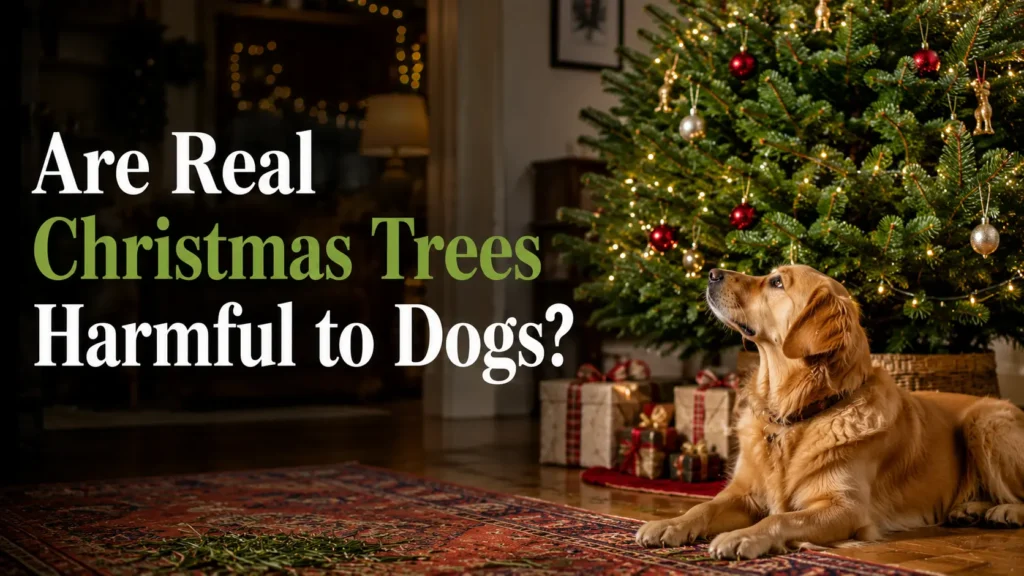
If you share your home with a dog, setting up a real Christmas tree can feel like inviting a beautiful problem into your living room. Suddenly there is a fragrant new object covered in dangling, swatable ornaments, a reservoir of mysterious water at its base, and a curious pet who wants to investigate all of it. It is no wonder so many dog owners pause and wonder whether the whole thing is safe.
Here is the reassuring news up front: most families can enjoy a real Christmas tree alongside their dogs without serious trouble. The tree itself is rarely the real danger. The genuine risks come from the practical hazards around it, things like swallowed needles, contaminated tree water, fragile ornaments, electrical cords, and the occasional toppled tree, and nearly all of those are manageable with a bit of preparation.
This guide walks through exactly what is and is not dangerous, separating real concerns from common myths, and gives you practical, vet-informed steps to keep your dog safe while you decorate. For more seasonal tree resources and decorating guides, you can explore the full library at MyChristmasTrees.online.
By the end, you will know which species matter, what to do if your dog nibbles a branch, how to dog-proof your setup, and when a situation warrants a call to the vet rather than a watchful eye at home.
A quick note before we begin: this article offers general, widely accepted pet safety guidance and is not a substitute for veterinary advice. If your dog shows concerning symptoms, always contact your veterinarian or an emergency animal poison service.
Quick Answer: Are Real Christmas Trees Harmful to Dogs?
Real Christmas trees are not considered highly toxic to dogs, but they can still create health and safety risks that are worth taking seriously. The tree species commonly used, including fir, pine, and spruce, are generally classified as mildly irritating rather than poisonous, so a dog is unlikely to be poisoned simply by being near or briefly chewing on one.
The more realistic concerns are physical and practical. Pine, fir, and spruce needles can irritate a dog’s mouth and stomach if eaten, and because they are sharp and indigestible, they pose choking and intestinal risks. Tree water can harbor bacteria, mold, fertilizers, or preservatives that may upset a dog’s stomach, which is why pets should never be allowed to drink it. And in many homes, the decorations and electrical cords around the tree present a greater danger than the tree itself.
| Potential Hazard | Risk Level | Main Concern |
|---|---|---|
| Tree needles (fir, pine, spruce) | Low to moderate | Mouth and stomach irritation, choking, blockage |
| Tree water | Moderate | Bacteria, mold, additives causing upset |
| Glass and fragile ornaments | Moderate to high | Cuts, choking, ingestion |
| Tinsel and ribbon | High | Intestinal obstruction |
| Electrical cords and lights | Moderate to high | Burns, shock |
| Unstable tree | Moderate | Injury from tipping |
The bottom line is that the tree is rarely the villain. With sensible precautions, most dog owners can safely enjoy a real tree throughout the holidays.
Why Dogs Are Attracted to Christmas Trees
Understanding why your dog gravitates toward the tree helps you anticipate and prevent problems. To a dog, a freshly installed Christmas tree is a sensory event, not a decoration.
The fresh evergreen scent is novel and interesting, drawing curious noses in for a closer investigation. The water in the stand looks like an inviting drinking bowl, especially to a thirsty dog who does not know the difference between it and the water dish in the kitchen. Hanging ornaments dangle and sway at exactly the right height to look like toys begging to be batted, mouthed, or pulled down.
The tree skirt offers a soft, blanket-like spot some dogs want to nest on or chew. Wrapped gifts underneath smell intriguing, particularly if any contain food, and the twinkling lights catch the eye and invite a closer look. For puppies and younger dogs especially, the whole arrangement is an irresistible new playground.
Recognizing these attractions is the first step in safety. Once you know what is drawing your dog in, you can address each temptation directly rather than simply hoping your pet ignores a very interesting new object in their territory.
Are Real Christmas Trees Poisonous?
This is the question at the heart of most dog owners’ worries, and the answer benefits from a clear distinction between three different kinds of risk: truly toxic, merely irritating, and physically hazardous.
A toxic substance causes poisoning when ingested. Christmas tree species do not fall into this category in any serious way. A dog is not going to be poisoned the way it would be by eating, say, a toxic houseplant or chocolate.
Irritating describes the actual effect of tree needles. The oils and sap in fir, pine, and spruce can mildly irritate a dog’s mouth, throat, and digestive tract, potentially causing drooling, mild stomach upset, or vomiting if a dog chews or swallows them. This is uncomfortable but usually not dangerous in small amounts.
Physical hazards are where the genuine danger lies. Sharp needles can scratch the mouth or throat, pose a choking risk, or in larger quantities contribute to intestinal blockage. This is a mechanical injury, not poisoning, and it is the risk most worth guarding against.
Here is how the common species stack up:
| Species | Toxicity | Needle Type | Notes |
|---|---|---|---|
| Fraser Fir | Mildly irritating | Soft, flat | Popular, good needle retention |
| Douglas Fir | Mildly irritating | Soft | Sheds fewer needles when fresh |
| Balsam Fir | Mildly irritating | Soft, flat | Strong scent, sheds moderately |
| Noble Fir | Mildly irritating | Stiff | Sturdy branches, sheds less |
| Scotch Pine | Mildly irritating | Stiff, sharp | Holds needles well |
| White Pine | Mildly irritating | Soft, flexible | Gentle needles |
| Spruce varieties | Mildly irritating | Stiff, sharp | Sheds more readily, sharper needles |
None of these are considered highly poisonous, but all can cause digestive upset or physical injury if a dog eats them. Spruces and pines with stiffer, sharper needles arguably pose a slightly higher physical risk than the softer firs. The practical takeaway is the same across species: discourage chewing and clean up fallen needles promptly.
Can Dogs Eat Christmas Tree Needles?
Dogs should not eat Christmas tree needles, and while a single nibble rarely causes a crisis, it is worth understanding what can go wrong so you can respond appropriately.
The most common consequence of swallowing a few needles is mild digestive irritation, which may show up as drooling, mild stomach upset, or vomiting as the body works to expel the indigestible material. In most cases this passes on its own.
The sharper concerns involve physical injury. Needles are pointed and rigid, so they can scratch or puncture the soft tissue of the mouth, gums, or throat. They also present a choking hazard, particularly for smaller dogs. If a dog consumes a larger quantity of needles, there is a risk of them accumulating and contributing to an intestinal blockage, which is a serious condition. Needle accumulation in the digestive tract can cause irritation along the way and, in rare cases, obstruction that requires veterinary intervention.
Veterinary care is recommended if your dog eats a significant amount of needles, shows signs of choking or distress, has persistent vomiting, appears lethargic or in pain, stops eating, or shows any signs of an intestinal blockage such as a bloated abdomen or inability to pass stool. For a dog that swallowed a needle or two and is otherwise behaving normally, monitoring at home is usually appropriate, but when in doubt, a quick call to your vet is always the safe choice.
Keeping the area beneath the tree free of fallen needles through regular cleanup dramatically reduces the chance your dog ingests them in the first place.
Is Christmas Tree Water Dangerous?
Tree water is one of the most overlooked hazards, and it is a real one. That reservoir in the stand may look like a convenient drinking spot to your dog, but it can become genuinely unpleasant and is something pets should never be allowed to drink.
Several factors make tree water risky. As it sits, the water becomes stagnant and can grow bacteria and mold, both of which can cause gastrointestinal upset if a dog laps it up. Sap and other organic matter leaching from the trunk add to this brew. Beyond the natural contamination, many people add things to tree water that are not meant for consumption.
Commercial tree preservatives are designed to keep the tree fresh, not to be ingested, and can contain ingredients that upset a dog’s stomach. Homemade additives are no safer: fertilizers, aspirin, sugar mixtures, and other folk remedies people pour into the stand can all be harmful to dogs. Sugar water in particular accelerates bacterial growth, making the water even less safe.
The practical solution is simple and effective: prevent access to the water entirely. Cover the reservoir so your dog cannot reach it, which we cover in detail in the dog-proofing section below. If you suspect your dog has drunk a meaningful amount of tree water, especially water containing additives, watch for vomiting, diarrhea, lethargy, or loss of appetite, and contact your veterinarian if symptoms appear or persist.
Christmas Decorations That Can Harm Dogs
In many homes, the decorations pose a bigger threat than the tree. Bright, dangling, and within reach, they are practically designed to tempt a curious dog, and several common types carry real risks.
| Decoration | Risk | Safer Approach |
|---|---|---|
| Glass ornaments | Cuts, choking on shards | Use shatterproof ornaments low on the tree |
| Tinsel | Intestinal obstruction if swallowed | Avoid entirely in dog homes |
| Ribbon and string | Obstruction, strangulation risk | Keep out of reach, secure tightly |
| Ornament hooks | Mouth and throat injury, ingestion | Use ribbon ties or secure hooks |
| Edible decorations | Ingestion, attracts chewing | Avoid food-based ornaments |
| Chocolate ornaments | Toxic to dogs | Never use on a dog-accessible tree |
| Salt dough ornaments | Salt toxicity if eaten | Keep away from dogs entirely |
| Lit candles | Burns, fire, tipping | Use flameless alternatives |
A few of these deserve emphasis. Tinsel is notorious among veterinarians because dogs find the shiny strands irresistible, and if swallowed, they can bunch up and cause a dangerous intestinal obstruction. Ribbon and string carry the same risk. Chocolate ornaments and salt dough ornaments are genuinely toxic if eaten, chocolate because of theobromine and salt dough because of its high salt content, so both should be kept well away from dogs. Glass ornaments shatter into sharp pieces that can cut paws and mouths, so shatterproof alternatives are far safer in a home with pets.
The guiding principle is to place anything fragile, edible, or stringy out of your dog’s reach, and ideally to avoid the highest-risk items like tinsel and edible ornaments altogether.
Christmas Tree Lights and Electrical Hazards
The strands of lights that make a tree magical also introduce one of the more serious dog hazards: electricity. The danger is not the lights themselves but the cords, which to a teething puppy or a bored dog can look like an appealing chew toy.
Chewing through a live cord can cause painful mouth burns, electric shock, and in severe cases more serious injury. The thin, accessible wiring near the base of the tree and the trailing extension cords running to the outlet are the main points of risk. Dogs who chew habitually or who are left unsupervised around the tree are most at risk.
Reducing this hazard comes down to managing the cords. Run them along walls and behind furniture where your dog cannot easily reach them, secure them with clips or cord covers, and unplug the lights whenever the tree is unsupervised. Choosing the right lights and using them safely also matters, and our complete Christmas tree lights and lighting guide walks through setup and safety in detail.
The type of light you choose plays a role too. LED lights run much cooler than older incandescent bulbs, which lowers the burn risk if a dog does make contact, and our comparison of LED vs incandescent Christmas lights explains the practical differences. If you use a pre-lit tree, understanding its electrical safety is important, and our guide on whether pre-lit Christmas trees are safe covers fire and electrical considerations that matter even more in a busy household with pets.
How to Dog-Proof a Christmas Tree
With the risks understood, here is a practical, step-by-step plan to set up a tree that your dog can coexist with safely. None of these steps is difficult, and together they address nearly every hazard discussed so far.
- Secure the tree firmly. Use a heavy, stable stand, and for extra security with larger dogs or determined climbers, anchor the top of the tree to a wall or ceiling hook with fishing line or wire so it cannot topple if bumped.
- Create a barrier. A low decorative fence, pet gate, or playpen around the base keeps dogs from reaching the trunk, water, and lower ornaments, which is especially useful for puppies and persistent investigators.
- Cover the water reservoir. Use a tree stand with a covered reservoir, or wrap the base of the stand with a tree skirt, foil, or a fitted cover so your dog cannot drink the water.
- Hide and secure cords. Route cords along walls, tuck them under the skirt, secure them with covers or clips, and unplug lights when you are not in the room.
- Place ornaments thoughtfully. Hang fragile and small ornaments high on the tree, and reserve the lower branches for shatterproof, dog-safe decorations. Skip tinsel and edible ornaments entirely.
- Train and redirect. Teach a reliable “leave it” command, reward calm behavior near the tree, and provide your dog with appealing toys so the tree is less interesting by comparison.
- Supervise, especially early on. Watch your dog closely in the first days after setup when the tree is most novel, and limit access to the room when you cannot supervise.
These measures work together. A barrier handles the physical access, a covered reservoir handles the water, cord management handles the electrical risk, thoughtful ornament placement handles the decorations, and training plus supervision handles the rest.
Are Artificial Trees Safer?
Many dog owners wonder whether switching to an artificial tree solves the problem. The honest answer is that artificial trees remove some risks while introducing or retaining others, so they are safer in certain respects but not risk-free.
On the positive side, an artificial tree has no tree water reservoir, which eliminates one of the more significant hazards entirely. It also does not shed sharp natural needles, removing the irritation and choking concerns associated with real foliage, and it avoids the sap and scent that draw some dogs in.
However, artificial trees are not hazard-free. Dogs can still chew on the plastic or PVC branches, which can cause digestive upset or, if pieces break off and are swallowed, a potential blockage. The decorations, lights, and cords remain exactly as risky as on a real tree, since those hazards have nothing to do with the tree material. And an artificial tree can still be knocked over by an enthusiastic dog.
| Factor | Real Tree | Artificial Tree |
|---|---|---|
| Needle hazard | Yes, sharp natural needles | No natural needles, but chewable plastic |
| Tree water risk | Yes | None |
| Branch ingestion | Mild irritation | Possible plastic blockage |
| Decoration and cord risk | Same | Same |
| Tip-over risk | Yes | Yes |
| Ongoing maintenance | Watering, needle cleanup | Minimal |
For a complete look at how the two options compare across every dimension, not just pet safety, see our detailed breakdown of real vs artificial Christmas trees. If environmental impact factors into your decision, our examination of whether artificial Christmas trees are eco-friendly is worth reading, and to weigh the long-term value of an artificial tree, our guide on how long artificial Christmas trees last helps you understand what you are getting for the investment.
The verdict is that neither type is automatically safe or unsafe. A well-managed real tree and a well-managed artificial tree can both be perfectly fine around dogs, while a carelessly decorated tree of either kind poses risks.
Caring for a Real Tree Around Pets
If you opt for a real tree, a few care habits keep it safer for your dog throughout the season. Good tree care and good pet safety overlap more than you might expect.
Clean up fallen needles daily. Vacuuming or sweeping around the tree each day removes the needles most likely to be eaten and keeps the area tidy. Fresh trees that are well watered shed fewer needles, so proper hydration is both a tree-care and a pet-safety measure.
Change and manage the water carefully. Keep the reservoir covered so your dog cannot drink it, and when you do top it up or change it, do so when your dog is out of the room. Avoid additives that could harm a pet, and remember that plain water is generally fine for the tree’s freshness in the short term.
Use a stable, heavy stand and position the tree where it cannot easily be knocked into. A wobbly tree is a hazard to both the tree and the dog.
For the fundamentals of keeping a real tree fresh and well hydrated, our real Christmas tree care guide on watering and longevity covers what every owner should know. To get the watering rhythm right, see how often to water a Christmas tree, and for the practical method of refilling a stand cleanly, our guide on how to water a Christmas tree walks through the technique while keeping the reservoir managed.
Best Christmas Tree Placement If You Have Dogs
Where you put the tree has a surprisingly large effect on how safe it is around a dog. Smart placement removes temptation and reduces the chance of accidents before they happen.
Position the tree in a corner, which limits the angles from which a dog can approach it and makes it easier to secure against a wall. Corners also reduce the tree’s exposure to the household traffic that might bump it.
Keep the tree away from doorways and high-traffic paths, where a dog dashing through could knock it over. Place it away from your dog’s play areas and favorite zones, so it does not sit in the middle of where your pet runs and roughhouses. Set it on stable, level flooring rather than a slippery surface or a spot where the stand could shift.
Think about the overall flow of the room so the tree sits in a calm, low-traffic spot rather than a busy thoroughfare. For larger trees, placement becomes even more important for both impact and safety, and our guide on where to place a 10-foot Christmas tree for maximum impact offers placement principles that apply to keeping any sizable tree stable and out of the way.
Decorating Safely With Dogs
You do not have to sacrifice a beautiful tree to keep your dog safe. With a few smart choices, you can have a gorgeous, festive tree that is also pet-friendly.
Choose shatterproof ornaments for the lower portion of the tree, reserving any fragile or sentimental glass pieces for the upper branches out of reach. Favor non-toxic decorations and avoid anything edible or made from materials like salt dough that could harm a dog if chewed. Fabric, felt, and wood ornaments are excellent dog-safe choices that look charming and survive a curious sniff or bump.
Secure the tree topper firmly so it cannot fall, and choose a tree skirt that your dog is unlikely to drag off or chew. Keep the lowest branches relatively sparse and simple so there is less down low to tempt your pet.
For ideas on building a cohesive, attractive look, our complete guide to Christmas tree decoration styles and themes helps you design a tree that is both beautiful and practical. And if you enjoy a hands-on approach, making your own dog-safe decorations is a great option, which our guide to DIY tree skirts and ornaments explores, letting you control exactly what materials end up within your dog’s reach.
What If Your Dog Eats Part of a Christmas Tree?
Even with precautions, dogs sometimes manage a nibble. Knowing how to respond calmly and appropriately matters more than panicking.
First, assess what and how much was eaten. A dog that swallowed a needle or two, a small piece of branch, or took a quick lap of tree water, and is otherwise acting completely normal, can usually be monitored at home. Watch for symptoms over the next several hours.
The symptoms to watch for include drooling, vomiting, diarrhea, loss of appetite, lethargy, pawing at the mouth, difficulty swallowing, or signs of abdominal discomfort. Mild, brief stomach upset that resolves on its own is common and usually not alarming.
Contact a veterinarian or an emergency animal poison service promptly if your dog ate a significant amount of needles or branch material, swallowed tinsel, ribbon, an ornament, or an ornament hook, drank a meaningful quantity of tree water containing additives, or shows concerning symptoms such as persistent vomiting, signs of choking, severe lethargy, a bloated or painful abdomen, or an inability to pass stool, which can indicate a blockage. Ingesting a foreign object like tinsel or a hook warrants prompt veterinary attention even if your dog seems fine, because obstructions are not always immediately obvious.
This article does not replace professional veterinary judgment. When you are uncertain, the safest course is always to call your vet, who can advise whether to monitor at home or come in.
Common Myths About Dogs and Christmas Trees
A lot of holiday pet advice circulates that is either exaggerated or simply wrong. Clearing up these myths helps you make calmer, better decisions.
Myth: Every Christmas tree is poisonous to dogs. Reality: The common tree species are mildly irritating, not highly toxic. The real risks are physical hazards and contaminated water, not poisoning by the tree itself.
Myth: Artificial trees are completely risk-free. Reality: Artificial trees remove the water and natural needle hazards but still present chewable plastic, and the decoration and cord risks are identical to a real tree.
Myth: Pine needles are always deadly. Reality: Swallowing a few needles usually causes only mild irritation. The serious risks, choking and blockage, generally involve larger quantities, and even then are manageable with prompt care.
Myth: Dogs naturally avoid dangerous decorations. Reality: Dogs are often drawn to exactly the items that are most dangerous, like shiny tinsel and dangling ornaments. They cannot judge what is safe, so prevention is up to the owner.
Understanding the truth behind these myths lets you take real risks seriously while not depriving your family of a real tree out of unfounded fear.
Recommendations
Most families can safely enjoy a real Christmas tree even with dogs in the home. The tree itself is rarely the problem, and the holidays do not have to come down to an either-or choice between a beautiful real tree and a safe pet.
The key is preparation rather than worry. Keeping the tree secure and anchored, preventing access to the water reservoir, choosing pet-safe shatterproof decorations and skipping the highest-risk items like tinsel, managing cords carefully, cleaning fallen needles promptly, and supervising curious pets in those first novel days together address the overwhelming majority of holiday risks.
What we would recommend for most dog owners is to treat the tree setup as a small project: spend a little extra time on stability, water coverage, and cord management at the start, decorate with your dog’s habits in mind, and you can then largely relax and enjoy the season. The dogs who get into trouble are almost always the ones with unsupervised access to an unsecured tree, accessible water, and tempting low decorations, all of which are entirely preventable.
Final Verdict: Are Real Christmas Trees Harmful to Dogs?
Real Christmas trees are not highly toxic to dogs, and the fear that simply having one is dangerous is largely unfounded. The common species used for Christmas trees are mildly irritating at worst, not poisonous.
The biggest genuine risks are physical hazards and contaminated tree water rather than the tree’s foliage itself. Sharp needles can cause choking or, in quantity, blockage; tree water can harbor bacteria and harmful additives; and the surrounding decorations and cords often pose more danger than the tree. Every one of these risks is manageable with straightforward precautions.
With a secured tree, a covered water reservoir, pet-safe decorations, careful cord management, prompt needle cleanup, and reasonable supervision, the great majority of families can safely enjoy a real Christmas tree alongside their dogs. Preparation, not avoidance, is what keeps everyone safe and the holidays merry.
Conclusion
Sharing your holidays with both a real Christmas tree and a dog is entirely doable. The needles call for prompt cleanup and a watchful eye, the tree water needs to be covered and kept out of reach, the decorations should be shatterproof and free of tinsel and edible items, and the lights and cords need sensible management to prevent burns and shocks.
Thoughtful tree placement in a stable, low-traffic corner and a few minutes spent anchoring and dog-proofing the setup go a long way. None of this requires giving up the tree you love, and none of it is complicated. With these precautions in place, you can decorate confidently, knowing your dog can investigate the new arrival without coming to harm, and focus on what the season is really about. When something does go wrong or you are unsure, your veterinarian is always the right call.
Frequently Asked Questions
Are real Christmas trees toxic to dogs? Real Christmas trees are not considered highly toxic to dogs. The common species, including fir, pine, and spruce, are mildly irritating rather than poisonous. The real risks come from physical hazards like sharp needles and from contaminated tree water, not from the tree being poisonous in the way some plants are.
What happens if my dog eats Christmas tree needles? A few needles usually cause only mild digestive irritation, such as drooling or a brief upset stomach. The bigger concerns are choking, mouth injury from the sharp points, and, if a large amount is eaten, intestinal blockage. Monitor a dog that ate a small amount, and contact your vet if it ate a lot or shows concerning symptoms.
Is Christmas tree water dangerous for dogs? Yes, dogs should never drink tree water. It can grow bacteria and mold as it sits, and it may contain preservatives, fertilizers, aspirin, or sugar that people add to the stand. Any of these can cause stomach upset. Keep the reservoir covered so your pet cannot reach it.
Which Christmas tree is safest for dogs? No common species is highly dangerous, but softer-needled firs like Douglas and Fraser fir pose slightly less physical risk than stiff, sharp-needled spruces and pines. That said, safety depends far more on how you secure the tree, manage the water, and choose decorations than on the species itself.
Can pine needles kill a dog? It is very unlikely that a few pine needles would kill a dog. They typically cause only mild irritation. Serious outcomes are rare and usually involve large quantities causing intestinal blockage, which can be treated if caught promptly. The myth that pine needles are always deadly is an exaggeration.
Are artificial Christmas trees safer for dogs than real ones? Artificial trees remove the tree-water hazard and natural needle risks, which is a genuine advantage, but they introduce chewable plastic that can cause blockages, and the decoration and cord risks are identical. Neither type is automatically safe; both depend on how carefully they are set up and decorated.
How do I keep my dog away from the Christmas tree? Use a stable, anchored tree, place a pet gate or low barrier around the base, cover the water reservoir, hide and secure cords, keep fragile and edible ornaments out of reach, teach a reliable “leave it” command, provide appealing toys, and supervise closely in the first few days when the tree is most tempting.
What Christmas decorations are most dangerous to dogs? Tinsel and ribbon are among the most dangerous because they can cause intestinal obstruction if swallowed. Glass ornaments can shatter and cut, ornament hooks can injure the mouth, and chocolate or salt dough ornaments are toxic. Choose shatterproof, non-edible decorations and skip tinsel entirely in a home with dogs.
My dog drank Christmas tree water. What should I do? Watch for vomiting, diarrhea, lethargy, or loss of appetite over the next several hours. A small amount of plain water often causes only mild upset, but water containing preservatives, aspirin, fertilizer, or sugar is more concerning. If symptoms appear or your dog drank water with additives, contact your veterinarian.
Can I have a real Christmas tree with a puppy? Yes, but puppies require extra caution because they explore with their mouths and are drawn to chewing. Use a barrier around the tree, keep all low decorations shatterproof and out of reach, secure cords, cover the water, and supervise closely. With these precautions, many families safely keep a real tree even with a young, curious puppy.