

Christmas is supposed to feel magical. But if you live in a studio apartment, a tiny home, or a compact condo, setting up a full-size Christmas tree can feel less like holiday cheer and more like a spatial puzzle with no winning solution. The tree takes over the living room, blocks walkways, and suddenly your cozy little space feels cluttered rather than festive.
The good news? You do not need a sprawling living room to create a stunning Christmas setup. Across mychristmastrees.online, small-space decorators have been finding clever, practical ways to celebrate the season without sacrificing the square footage they actually need to live in. This guide covers every space saving christmas tree idea worth knowing, from clever furniture arrangements to tree types designed specifically for tight quarters.
Whether you are decorating a studio apartment, navigating a shared living space, or just tired of a tree that dominates your whole room, these christmas tree hacks will help you create a holiday setup that looks intentional rather than improvised.
Why Space-Saving Christmas Trees Are More Popular Than Ever
Apartment living has changed a lot over the past decade. More people are living in smaller spaces by choice or by necessity, and that shift has pushed holiday decorating to evolve alongside it. Studio apartments, micro-units, tiny homes, and compact condos have become commonplace in cities around the world.
Add to that a growing minimalist movement, and you have millions of people who want a beautiful, festive Christmas aesthetic without filling their home with oversized decor. The demand for compact christmas tree options, wall-mounted displays, and creative alternatives has exploded precisely because people no longer see small spaces as an obstacle to holiday decorating. They see them as a design challenge worth solving.
There is also a practical side. Smaller homes mean less storage. If you are paying a premium for every square foot of closet space, storing a massive tree after the holidays becomes its own problem. Space-saving trees and decorating strategies help you celebrate without creating a storage headache in January.
Common Christmas Tree Problems in Small Spaces
Before getting into the hacks, it helps to name the actual problems. Small-space Christmas decorating has a few recurring pain points.
Limited Floor Space
This is the most obvious one. A standard Christmas tree needs a footprint of at least 3 to 5 feet in diameter, plus clearance around it for presents and movement. In a 400-square-foot studio, that is a significant chunk of usable floor space gone for an entire month.
Crowded Living Rooms
Many small living rooms are already working hard, with a sofa, coffee table, entertainment unit, and maybe a dining area all sharing the same space. Adding a full tree can make the room feel claustrophobic and disorganized.
Shared Spaces
People in shared apartments, dorm rooms, or multi-generational homes often have limited territory to work with. A tree that takes up communal space can create friction, especially if not everyone celebrates Christmas.
Storage Challenges
Even if you can find room for a tree during December, where does it go the other eleven months? Full-size artificial trees require large storage boxes, and real trees obviously cannot be saved at all. Compact, foldable, or minimal tree options dramatically reduce the storage burden.
Furniture Layout Issues
Standard trees are round and take up central floor space, which means furniture has to move around them. In small rooms, that often creates awkward layouts that disrupt the natural flow of the space.
Best Space-Saving Christmas Tree Hacks
These are the techniques that actually work. Not just in theory but in real small homes.
Use Vertical Space
Small rooms typically have more vertical room than they have floor space. A tall, narrow tree that reaches toward the ceiling draws the eye upward and creates a sense of height and drama without taking up much floor area. Pair it with a star or angel topper that nearly touches the ceiling, and the whole room feels taller and more festive.
Vertical decorating also extends to walls. Garlands, light strings arranged in a tree shape, and vertical shelf displays all capitalize on unused wall space.
Choose a Slim Tree
This is probably the single most impactful decision for a small-space Christmas. A slim or pencil tree has the traditional tree silhouette but a fraction of the width. Most slim trees measure between 18 and 24 inches in diameter, compared to 50 to 60 inches for a full-bodied tree of the same height. That difference is enormous in a small room.
Decorate Corners
Corners are one of the most underused spaces in any room. Tucking your tree into a corner accomplishes two things at once. It gets the tree off the main floor area and reduces the perceived footprint, since only the front half of the tree is actually visible. A corner placement can make a 4-foot-wide tree feel much less intrusive.
If you want to maximize a corner, check out these corner christmas tree setup ideas for room layouts that work with your existing furniture rather than against it.
Use Multi-Purpose Furniture Areas
Place your tree on a side table, a console, or a sturdy shelf. This elevates the tree, makes it more visible from across the room, and frees up the floor entirely. A tabletop tree on a console table in the hallway, for example, creates a festive entryway moment without using a single square foot of living room space.
Create Floating Displays
Wall-mounted trees, peg-board displays, and hanging ornament arrangements take holiday decorating completely off the floor. These setups work particularly well in rental apartments where you cannot make permanent changes, as many options use removable adhesive hooks or existing shelving.
Scale Decorations Properly
One mistake that makes small trees look underwhelming is using full-size ornaments. A 4-foot tree hung with 4-inch ornaments ends up with only a handful of decorations and looks sparse. Scale down to 1.5 to 2-inch ornaments on compact trees, and suddenly the tree looks full and intentional rather than half-done.
Reduce Tree Width Without Sacrificing Height
Some artificial trees have adjustable branches that can be folded closer to the trunk, creating a slimmer silhouette even on a tree that was not designed as a pencil or slim variety. This is worth trying before replacing a tree you already own.
Tabletop Christmas Trees: Small Size, Big Impact
Tabletop trees have had something of a design renaissance in recent years. What used to feel like a compromise now looks like a deliberate, stylish choice. A well-decorated tabletop tree on a dining table, bookshelf, or kitchen counter can have more visual impact than a floor tree three times its size.
The benefits go beyond space. Tabletop trees are easier to decorate, safer around young children and pets, faster to set up and take down, and much easier to store. They also work in rooms where a floor tree would be completely impractical, including small bedrooms, bathrooms, and home offices.
When choosing a tabletop tree, pay attention to the proportion between the tree and its surface. A 24-inch tree on a low coffee table can look awkward, but that same tree on a 30-inch console table or dining sideboard looks perfectly scaled.
For a full breakdown of the best options and decorating strategies, this guide to tabletop christmas trees for small spaces covers everything you need to choose the right one.
Wall-Mounted Christmas Trees
If floor space is genuinely at a premium, wall-mounted trees remove the equation entirely. These displays use the vertical plane of your walls to create the shape and impression of a Christmas tree without any footprint at all.
Wall trees range from sophisticated to simple. On one end, you have flat-profile artificial trees that mount directly to the wall like a 2D silhouette. On the other, you have DIY arrangements of fairy lights, garlands, or even painted designs that create a tree shape using the wall as the canvas.
For renters, wall trees are particularly appealing because many versions use removable Command strips or existing picture hooks. No drilling, no damage, no security deposit problems. They also work well in rooms where furniture placement makes a floor tree impossible, and in homes where children or pets make a traditional tree a safety concern.
The design appeal of wall trees has also grown considerably. A well-executed wall display with warm fairy lights and a few hanging ornaments can look genuinely modern and intentional rather than improvised. These wall-mounted christmas tree ideas with no floor space needed are a great starting point.
Best Types of Christmas Trees for Small Spaces
| Tree Type | Height Range | Floor Space Required | Best For |
|---|---|---|---|
| Pencil Tree | 4 to 7.5 feet | 12 to 18 inches diameter | Narrow hallways, small living rooms |
| Slim Tree | 4 to 7.5 feet | 18 to 24 inches diameter | Most small apartments |
| Half Tree | 4 to 6 feet | Flush to wall | Very tight spaces, renters |
| Tabletop Tree | 12 to 36 inches | Zero floor space | Desks, counters, bookshelves |
| Wall Tree | Any | Zero | Rental apartments, minimal spaces |
| Pop-Up Tree | 4 to 6 feet | 18 to 24 inches | Easy setup, storage-focused |
| Foldable Tree | 4 to 6 feet | 12 to 18 inches | Storage-limited homes |
Pencil Trees
Pencil trees are the most extreme version of the slim silhouette. They are taller than they are wide, with branches that extend only a few inches from the trunk. This creates a striking, elegant look that actually suits minimalist and modern interiors quite well. The narrow profile makes them ideal for hallways, bedroom corners, and spots beside furniture. Styling a pencil tree well is something of an art, and this guide on how to style a pencil christmas tree in a corner walks through the best approaches.
Slim Trees
Slim trees offer a middle ground between the dramatic pencil silhouette and a traditional full tree. They look like a conventional Christmas tree but with a reduced profile that fits comfortably in small rooms. This is the most versatile option for most apartment dwellers.
Half Trees
Half trees are flat on one side, designed to sit flush against a wall. They look like a complete tree from the front but take up almost no depth. This is an underrated option for very small spaces or for rooms where furniture placement makes a round tree difficult.
Tabletop Trees
Covered in their own section above, tabletop trees are an excellent full-time solution for small spaces or a secondary tree for rooms that cannot accommodate a floor model.
Wall Trees
Also covered above. These are the best option when floor space is completely unavailable.
Pop-Up Trees
Pop-up trees are pre-lit, pre-shaped trees that open out of their box and are ready to decorate in minutes. They typically pack down into a flat or compact form that is much easier to store than traditional artificial trees. The convenience factor is real, though the design tends toward the functional rather than the architectural.
Foldable Trees
Foldable trees collapse down to a slim profile for storage. Some versions fold flat like a fan, while others hinge around a central pole. The storage advantage is significant for anyone working with limited closet space.
For a detailed comparison of all these types in one place, this overview of slim and pencil christmas trees for small spaces is worth reading before you shop.
Apartment-Friendly Christmas Tree Ideas
Different apartment types present different challenges and opportunities.
Studio Apartments
In a studio, every decision matters because your living, sleeping, and dining areas all share the same room. A tabletop tree on the kitchen island or dining table, or a slim floor tree tucked into the corner near the sofa, works well here. Avoid floor trees with wide profiles that bisect the room’s traffic flow.
Condos
Condos often have a bit more square footage but still benefit from a slim or corner-placed tree. The added ceiling height typical of modern condos makes a tall, narrow pencil tree look especially striking.
Dorm Rooms
Dorm rooms are arguably the most constrained environment for Christmas decorating. A tabletop tree is almost always the answer here, or a wall-mounted display using fairy lights. Battery-operated trees and lights avoid the extension cord problem common in dorms.
Tiny Homes
Tiny home Christmas decorating is its own category. With square footage in the 100 to 300 range, even a compact floor tree can be too much. Wall trees, tabletop trees, and garland-based alternatives work best. The key is designing the tree as part of the overall interior rather than adding it on top of an already-furnished space.
Home Offices
A small tree on a desk or bookshelf turns a home office into a festive working environment without taking up any floor space. A 12 to 18-inch tabletop tree with warm lights is enough to create the mood without the distraction.
Decorating Hacks That Make Small Trees Look Bigger
A small tree does not have to look small. These techniques make compact trees punch above their weight.
Strategic lighting. Lights do more for a tree’s perceived fullness than almost anything else. Warm white LED lights woven deep into the branches from the trunk outward create depth and volume. A single strand draped on the outer branches looks thin. Use twice as many lights as you think you need, and work inward first. For everything you need to know about this, the christmas tree lights lighting guide is the definitive resource.
Ornament sizing. Match ornament size to tree size. Use small ornaments (1 to 1.5 inches) on tabletop trees, medium ornaments (2 to 2.5 inches) on slim floor trees. Oversized ornaments on small trees make the tree look sparse.
Ribbon placement. A ribbon or garland woven through the branches adds visual volume without adding physical bulk. Choose a ribbon in a contrasting color or texture for maximum effect.
Visual layering. Layer ornaments at different depths, some pushed to the inner branches, some at the tips. This creates the appearance of fullness and dimension even on a narrow tree.
Height illusion techniques. Place the tree on a stand that adds 6 to 8 inches of height, and choose a tall topper. A star that reaches close to the ceiling makes even a modestly sized tree feel grand.
Space-Saving Christmas Tree Decorating Styles
Minimalist
Minimalist Christmas decorating is perfectly suited to small spaces because restraint is the whole point. A pencil tree with matte white or silver ornaments and simple warm lights creates a clean, sophisticated look. No tinsel, no clashing colors, no overcrowded branches. For more ideas, this guide to minimalist christmas tree ideas shows how less decor can create more impact.
Scandinavian
Scandinavian style Christmas decorating emphasizes natural materials, simple shapes, and a warm, cozy atmosphere. Wooden ornaments, dried citrus slices, straw stars, and white or red ribbons are typical elements. This style works beautifully on both slim floor trees and tabletop trees. The scandinavian christmas tree style guide covers this aesthetic in depth.
Farmhouse
Farmhouse Christmas style brings in earthy textures and a relaxed, handmade quality. Buffalo check ribbons, cotton ball garlands, burlap bows, and wooden signs create warmth without requiring a large tree. A farmhouse-style slim tree in the corner of a small living room can anchor the entire room’s holiday aesthetic. If this style appeals to you, farmhouse christmas trees are having a moment for good reason.
Rustic
Rustic decorating leans into natural materials and imperfect beauty. Pinecones, twine, dried florals, and wooden ornaments work on any size tree. A rustic tabletop tree on a kitchen counter looks like it belongs there rather than being a holiday insert. For ornament ideas that suit this style, the rustic christmas tree decorations guide has plenty of inspiration.
Luxury
Luxury decorating in a small space is all about quality over quantity. A few well-chosen glass ornaments, velvet ribbons, and sophisticated metallic accents on a slim or pencil tree can look more expensive and curated than a large tree covered in mismatched decorations. The key is restraint and choosing pieces with genuine visual weight.
Smart Furniture Layout Around Christmas Trees
| Room Type | Recommended Tree Placement | Tree Type |
|---|---|---|
| Small living room | Back corner, away from sofa | Slim or corner tree |
| Studio apartment | Near window or console table | Tabletop or slim |
| Bedroom | Dresser or nightstand | Tabletop only |
| Home office | Desk corner or bookshelf | Tabletop only |
| Open floor plan | Zone corner near dining or seating | Pencil or slim |
Living Rooms
Pull furniture slightly away from corners and tuck the tree into the corner behind or beside the sofa. This placement keeps the tree visible from the main seating area without disrupting traffic flow.
Bedrooms
Floor trees in bedrooms rarely work unless the room is large. A tabletop tree on the dresser or nightstand creates a festive mood without taking up floor space you need for moving around the room.
Home Offices
Position a tabletop tree in the corner of the desk or on a nearby bookshelf. Make sure it is out of your direct eyeline when working so it adds to the atmosphere without becoming a distraction.
Open Floor Plans
Open-plan spaces can actually accommodate a larger tree than you might expect, but placement matters. Choose a corner between the seating and dining areas, or use the tree as a zone divider. This creates a natural anchor point for the holiday setup.
Storage Hacks for Christmas Trees and Decorations
Off-season storage is a real obstacle for small-space decorators. These approaches make it manageable.
Under-bed storage. Slim, flat storage bags designed for Christmas trees fit under most beds. This is ideal for pencil and slim trees that break down to a relatively compact size.
Closet organization. Vertical closet organizers can make room for boxed tree sections by utilizing height rather than floor area. Store the heaviest sections at the bottom and lighter sections higher up.
Compact decoration systems. Invest in ornament storage boxes with individual compartments rather than wrapping ornaments in tissue paper. They take up less space, protect ornaments better, and make setup faster next year.
Vacuum storage bags. Wreaths, garlands, and fabric decorations compress dramatically in vacuum storage bags, freeing up surprising amounts of closet space.
Common Small-Space Decorating Mistakes
Choosing an oversized tree. The most common mistake. A 7-foot tree in a 400-square-foot apartment will dominate the space regardless of where you put it. Match tree size to room size, not to holiday enthusiasm. This guide on what height christmas tree you should buy helps you find the right fit.
Blocking pathways. A tree that interrupts the main traffic path through a room creates daily frustration for the entire holiday season. Always check that you can move naturally around the room before committing to a tree placement.
Overdecorating. More ornaments do not automatically mean more festive. On a small tree, overloading branches creates visual clutter. Edit your ornament selection and choose quality over quantity.
Ignoring scale. Full-size ornaments, oversized bows, and large tree toppers on compact trees look out of proportion. Scale every element of the decoration to the tree size.
Poor lighting choices. Cool white or harsh LED lighting can make small festive spaces feel cold and clinical. Warm white lights create the cozy, inviting atmosphere that makes Christmas decorating work.
Budget-Friendly Space-Saving Christmas Tree Ideas
Not every space-saving solution requires buying a new tree. Here are options that cost little or nothing.
DIY wall tree. Arrange green paper cutouts, string lights, or even green painter’s tape on a wall in a tree shape. Add small ornaments with removable hooks and you have a free, zero-footprint tree.
Reusable decorations. Invest once in a quality slim or tabletop tree and quality ornaments that last a decade. The upfront cost pays off compared to buying and discarding real trees every year.
Minimalist decorating. A plain slim tree with one strand of warm lights and a handful of meaningful ornaments is more impactful than a tree covered in cheap, cluttered decorations. The minimalist approach costs less and looks better.
Repurposed items. Ladder trees, branch arrangements in vases, and stacked books can all serve as unconventional tree bases that cost nothing if you already have the materials.
Alternative Christmas Tree Ideas
| Alternative | Space Required | Best Setting | Cost Range |
|---|---|---|---|
| Hanging tree | Near zero floor space | Rental apartments | Low |
| Shelf tree | None (uses existing shelf) | Any room | Low to medium |
| Ladder tree | Small footprint | Living rooms, bedrooms | Low |
| Garland tree | None | Walls, staircases | Low |
| Light tree | None | Any wall | Low |
Hanging Trees
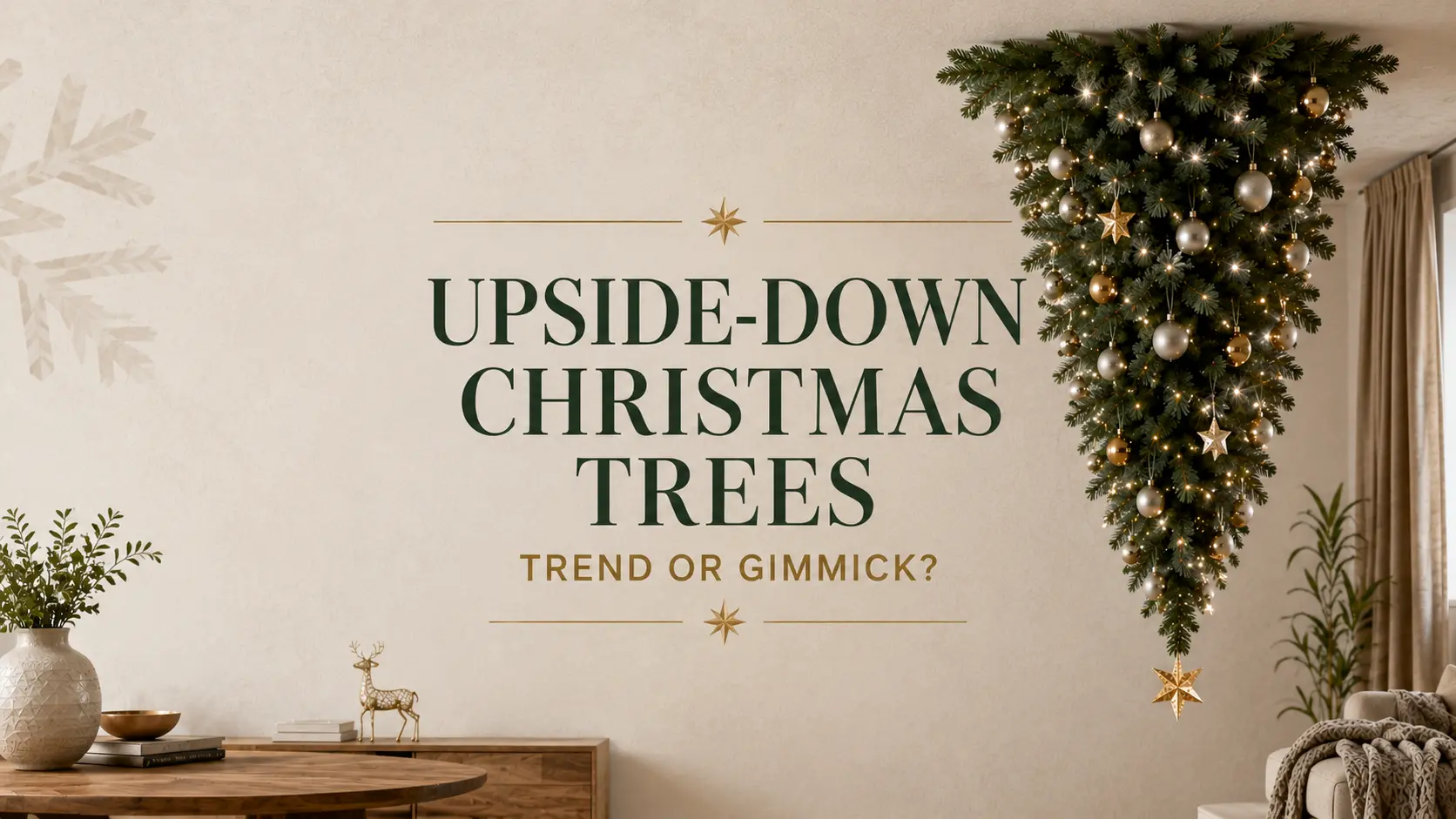
A hanging tree is made from branches, a hoop, or a cone-shaped frame suspended from the ceiling. Ornaments hang from it, and lights can be woven through the structure. The result is an artistic, floating holiday display that takes up no floor space at all.
Shelf Trees
Arrange a series of staggered shelves on a wall in the shape of a triangle, widest at the bottom and narrowing to a point at the top. Decorate each shelf with greenery, ornaments, and lights. This creates a functional tree display that doubles as storage or display space year-round.
Ladder Trees
A wooden or metal ladder leaning against a wall becomes an instant Christmas tree alternative. Drape garlands, lights, and ornaments across the rungs. Vintage wooden ladders in particular look beautiful decorated this way, and they function as year-round decor when the holiday items are removed.
Garland Trees
Use green garland to create a tree outline on a wall, starting with a single strand at the top and adding progressively longer strands as you move down. Add battery-operated lights and a few ornaments. This works best on a large, clear wall.
Light Trees
Arrange fairy lights on a wall in the shape of a tree using removable hooks. This is the most minimalist option of all and works beautifully in dim evening light. Add a star-shaped light at the top for the finishing touch.
Are Space-Saving Christmas Trees Worth It?
Advantages
The advantages go beyond saving space. Compact and alternative tree setups are faster to assemble, easier to store, often safer around children and pets, and can look more intentional and styled than a default full-size tree in a small room. They also tend to cost less, both upfront and in terms of the energy used by any built-in lighting.
Limitations
The main limitation is sentimental. For people who grew up with a large, full-bodied tree as the centerpiece of Christmas, a compact alternative can feel like a compromise. There is also a practical limit to how many ornaments you can hang on a narrow or tabletop tree.
Best Use Cases
Space-saving trees are genuinely ideal for anyone in an apartment, condo, studio, tiny home, or shared space. They are also the right choice for second locations like home offices, guest bedrooms, or vacation rentals where a full decorating setup is impractical.
Long-Term Practicality
A good slim, pencil, or tabletop tree paired with a coordinated set of compact ornaments is a long-term investment. Many artificial trees last 10 years or more with proper storage. The initial decision to go compact pays off every holiday season.
Future Trends in Small-Space Christmas Decorating
The future of small-space holiday decorating is moving toward even more flexibility and personalization. Modular trees that can be configured in different heights and widths are gaining ground, as are trees that incorporate smart lighting systems with app control and programmable color patterns.
Wall displays are becoming more sophisticated, with framed tree prints that incorporate real hooks for hanging ornaments. Minimalist and maximalist aesthetics are both growing, but in opposite directions: some decorators are stripping everything back to a single illuminated shape, while others are using every available surface for an immersive holiday environment.
The broader range of 2026 trends in decoration themes is worth exploring if you want to get ahead of what is resonating right now. This overview of christmas tree decoration styles and themes for 2026 covers the directions that are gaining momentum.
The Best Space-Saving Christmas Tree Hacks for Every Home
There is no single right answer to small-space Christmas decorating, but there is almost always a right answer for your specific space.
For renters: Wall trees, tabletop trees, and ladder trees offer zero-damage, fully reversible decorating that satisfies the seasonal impulse without risking your deposit.
For apartment dwellers: A slim or pencil floor tree in a corner is the best investment. It looks like a traditional Christmas tree while fitting into the room’s existing layout. Pair it with properly scaled ornaments and warm lights for maximum impact.
For tiny home owners: Think off the floor entirely. Tabletop trees, hanging trees, and garland wall trees work within the strict constraints of tiny home living without creating clutter.
For families: A corner slim tree is ideal because it maximizes the tree’s visual presence while keeping it out of the center of the room where children and pets move. Place gifts in front rather than beneath to reduce the footprint further.
For minimalists: A pencil tree with a single string of warm white lights and a dozen carefully chosen ornaments is all you need. Restraint is the point, and the result is usually the most visually striking setup in the room.
Conclusion
Small spaces do not require small Christmas spirits. With the right tree type, the right placement, and a few thoughtful decorating decisions, even the most compact apartment can feel genuinely festive.
The best space saving christmas tree ideas share a common thread: they work with the space rather than against it. That means matching the tree size and shape to what the room actually has room for, using vertical space and walls instead of always defaulting to the floor, scaling decorations to the tree rather than defaulting to full-size ornaments, and choosing a style that feels intentional rather than squeezed in.
Whether you go with a slim floor tree in the corner, a tabletop tree on the console, a wall-mounted display, or a creative alternative like a ladder or garland arrangement, the goal is the same: create something that makes your home feel warm, festive, and like yours. That feeling is completely independent of square footage.
Frequently Asked Questions
1. What is the best christmas tree for a small apartment? A slim or pencil artificial tree in the 5 to 6.5-foot range is the best all-around option for most small apartments. It fits in corners, uses minimal floor space, and still looks like a traditional Christmas tree. Tabletop trees are better for true micro-spaces like studios under 300 square feet.
2. How do I make a small christmas tree look fuller? Use more lights than you think you need, weaving them from the trunk outward rather than just along the outer branches. Use small ornaments scaled to the tree size, layer some deep into the branches, and add a garland or ribbon to create visual volume without physical bulk.
3. Can I put a christmas tree in a tiny home? Absolutely. The best options for tiny homes are wall-mounted displays, hanging trees, tabletop trees on counters or built-in shelves, and garland arrangements on existing walls or stair railings. The key is choosing a setup that integrates with the room rather than sitting on top of it.
4. What is a pencil christmas tree and who should use one? A pencil tree is a very narrow artificial tree where branches extend only a few inches from the trunk. It stands tall but takes up minimal floor space, often with a base diameter under 18 inches. They are ideal for small living rooms, hallways, and bedrooms where a standard tree would block traffic or crowd furniture.
5. Are wall-mounted christmas trees good for renters? Yes, especially versions that use removable adhesive hooks or hang from existing curtain rods and picture rails. Many wall tree options require no drilling and leave no marks on walls, making them ideal for rental apartments.
6. How much floor space does a slim christmas tree need? Most slim trees have a base diameter of 18 to 24 inches, which means the actual footprint is roughly 1.5 to 2 feet across. Place it in a corner to reduce the perceived footprint further, since half the tree is against the walls and out of the open room.
7. What are the best alternative christmas tree ideas for small spaces? The most practical alternatives are ladder trees (a leaning ladder decorated with garlands and ornaments), shelf trees (staggered wall shelves arranged in a tree shape), wall light trees (fairy lights arranged in a tree shape on a wall), and hanging trees (a suspended frame with ornaments). Each takes up little or no floor space.
8. How do I store a slim or tabletop christmas tree after the holidays? Most slim and tabletop artificial trees pack into boxes significantly smaller than full-size tree boxes. Slim trees can often be stored under beds or in deep closet shelves. Tabletop trees fit in standard storage bins or on closet shelves. Using compression bags for fabric and garland decorations maximizes the space saved.